


Can pets sense blood sugar changes? What science says about diabetes alert animals

If you live with diabetes and share your home with a pet, you may have noticed little things. A dog that paws at you when you feel shaky. A cat that refuses to leave your side when you are low. Parents often tell stories of their child’s dog nudging them before a hypo even showed on the CGM. It makes you wonder – are pets simply in tune with us, or can they really sense blood sugar changes?
Disclaimer: This article is for education only. It is not medical advice. Always follow your diabetes care team’s guidance.
Why dogs notice what humans miss
Dogs live in a world of scent. While humans have about six million smell receptors, dogs have up to 300 million. That means they pick up on tiny changes in odour that we could never detect. When blood sugar falls, chemical compounds in sweat and breath change – and research shows trained dogs can notice (Rooney et al. 2019; Gonder-Frederick et al. 2017).
Think about how your dog reacts when you come home from work. They know it is you before you even open the door. The same incredible nose may allow them to notice when glucose levels drop, prompting behaviours like nudging, pawing, or staring until you respond.
CGMs and dogs: Different strengths
You might be wondering – if dogs can do this, why do we need CGMs? The truth is, diabetes alert dogs can be amazing companions, but they are not medical devices. Their alerts depend on training, mood, and bond with their owner.

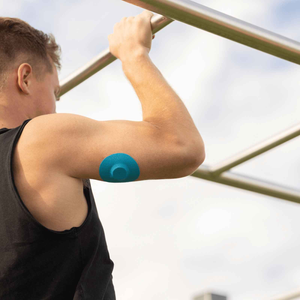
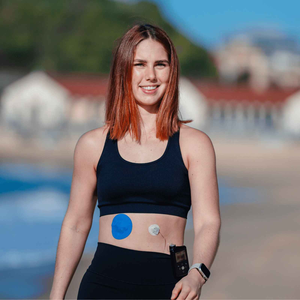
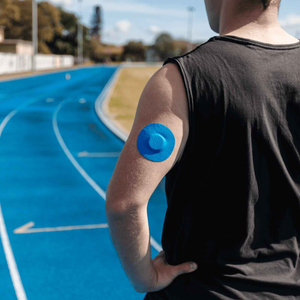
A CGM, by comparison, gives precise numbers every few minutes. It shows whether you are trending up or down and keeps records you can share with your care team. Patches, like Dexcom G7 patches, help keep those sensors secure during daily life, whether you are walking your dog or playing fetch.
Here’s a simple comparison:
|
Feature |
Diabetes alert dogs |
Continuous glucose monitors |
|
Detection method |
Scent of VOCs |
Interstitial glucose sensor |
|
Response speed |
Sometimes immediate |
Data every 1–5 minutes |
|
Accuracy |
Varies by training |
Clinically validated |
|
Availability |
Limited, costly |
Widely available |
|
Everyday role |
Support + companion |
Data-driven glucose trends |
Many people find the combination powerful – a CGM for accuracy, and a loyal dog for comfort and backup alerts.
What about other animals?
Stories circulate of cats acting clingy during hypos, parrots squawking more loudly, or horses refusing to move when their rider’s glucose is low. These are fascinating anecdotes, but so far, only dogs have been formally trained and studied in this field (University of Cambridge 2022).
People also ask
Can dogs really detect low blood sugar?
Yes. Studies confirm that trained diabetes alert dogs can detect hypoglycaemia by scent (Rooney et al. 2019). For safety, though, they should be seen as supportive rather than as replacements for CGMs.
How accurate are diabetes alert dogs compared to CGMs?
Dogs can sometimes alert faster than a sensor shows a drop, but they are not as consistent. CGMs remain the most accurate, regulated option for tracking glucose (American Diabetes Association 2023).
What animals can sense blood sugar changes?
Dogs are the only animals proven in scientific studies. Cats and other pets may notice behavioural changes, but evidence remains anecdotal.
Living well with pets and technology
Pets already give you emotional support, which is valuable in diabetes care. If your dog also alerts you to lows, that’s an added gift. Still, your CGM should be your main guide. To make sure it stays reliable, take steps like proper skin prep, choosing hypoallergenic options if needed, and using adhesive wipes or a bundle of patches to avoid peeling.

Closing thoughts
The bond you share with a pet can be extraordinary. Science now explains why dogs, in particular, may sense changes in blood sugar. But the real power comes when loyalty meets technology – a trusted CGM secured with the right patch, and a pet who simply wants you safe. Together, they make diabetes management feel less like a burden and more like teamwork.
References
American Diabetes Association (2023) Standards of Care in Diabetes – Technology. Diabetes Care, 46(Supplement 1), pp. S111–S127. Available at: https://diabetesjournals.org/care/article/46/Supplement_1/S111/148441 (Accessed: 30 September 2025).
Gonder-Frederick, L., Rice, P., Warren, D., Vajda, K., Shepard, J. and Clarke, W. (2017) ‘Diabetes alert dogs: A preliminary survey of current users’, Diabetes Care, 40(10), pp. 1296–1299. https://doi.org/10.2337/dc16-2446
Rooney, N.J., Guest, C., Swanson, L.C. and Morant, S. (2019) ‘How effective are trained dogs at alerting their owners to changes in blood glycaemic levels?’, Diabetic Medicine, 36(11), pp. 1448–1454. https://doi.org/10.1111/dme.14026
University of Cambridge (2022) Medical detection dogs research. Available at: https://www.cam.ac.uk/research (Accessed: 30 September 2025).


