

Sleeping with a CGM: What Happens When You Lie on It, and How to Stop It


Quick answer: yes, and here is what to expect
Yes, you can sleep with a CGM sensor and patch on, and most nights it won't cause any problem at all. The two things that actually happen: lying directly on the sensor can trigger a compression low, a false low reading caused by pressure rather than an actual drop in blood sugar, and a patch that isn't prepped or reinforced properly can peel by morning. These are two separate problems with two separate fixes: compression is about where the sensor sits, peeling is about the adhesive holding it there.
What a compression low is, and why it's not a real low
A compression low happens when sustained pressure on a sensor, most often from lying on it for an extended stretch, temporarily restricts blood flow and redistributes the interstitial fluid the sensor measures glucose from. Since Dexcom G7, Dexcom ONE+, FreeStyle Libre 2 Plus, FreeStyle Libre 3 Plus, Medtronic Guardian, and every other current CGM all measure glucose in that fluid layer rather than directly from blood, none of them are immune to this. A foundational study published in the Journal of Diabetes Science and Technology tracked overnight CGM readings against video-recorded sleep position and found that sudden, aberrant glucose drops were strongly correlated with subjects lying directly on their sensors, attributing the effect to local blood-flow changes from tissue compression rather than an actual change in blood sugar.
In practice, this shows up as an overnight low alarm that doesn't match how you feel: no shakiness, no sweating, none of the usual signs of a real low, because there isn't one. The reading is real, in the sense that the sensor is accurately reporting what it can currently detect in the compressed tissue. It just doesn't reflect your actual blood glucose at that moment. This isn't a flaw unique to one brand or model; it's inherent to how all current interstitial CGMs work, and it affects Dexcom, FreeStyle Libre, and Medtronic sensors alike, since all of them rely on the same fluid layer that pressure can temporarily disturb.

How to tell a compression low from a real one
A short routine at the alarm, sometimes called the 3am test, helps you tell the two apart without guessing:
-
Reposition. Shift off the sensor, moving your weight to the other side or onto your back.
-
Wait. Give it 10 to 15 minutes for blood flow to return to the compressed area.
-
Recheck. Look at the trend on your app. A compression low typically shows a sharp drop followed by an equally sharp recovery once pressure is off, often described as a V-shape on the graph.
If the reading climbs back toward your normal range within that window and you had no physical symptoms of a low, it was very likely a compression low. If you feel genuinely unwell, or the reading doesn't recover, treat it as a real low and follow your usual protocol. A finger-stick check is the reliable way to confirm either way if you're ever unsure, and it's always the right call when in doubt.

Where to put the sensor if you sleep on your side
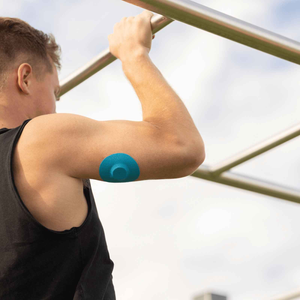
If you're a side sleeper, the most direct fix is placing your next sensor on the arm or thigh you don't habitually sleep on. If you always sleep on your left side, a sensor on the left upper arm is going to spend hours under your own body weight most nights; the right arm or thigh avoids that entirely. If you switch sides through the night or can't predict which way you'll settle, the abdomen is a reasonable alternative for devices approved for that site, since it sees less sustained direct pressure than an arm pinned under a shoulder. This won't eliminate compression lows completely, since any spot can end up under pressure occasionally, but it meaningfully reduces how often it happens.
It's also worth thinking about which arm or leg you actually use for other things overnight. If you tend to sleep with one arm tucked under a pillow or curled against your chest, that arm is under a different kind of pressure even if you're not fully lying on your side, and it's worth factoring into where the next sensor goes as much as your general sleep position is.
Stomach, arm or thigh overnight
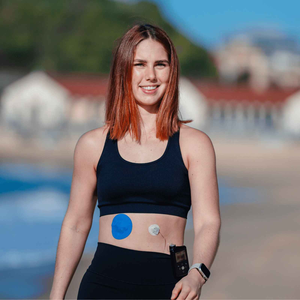
Beyond the side-sleeping fix, the general placement principles that apply during the day apply overnight too, just with sleep position added to the list of things to consider. Our full CGM placement guide covers approved sites for each device and how to rotate between them; the short version for sleep specifically is to pick whichever approved site sees the least sustained pressure from your particular sleep position, and to always follow your specific device's approved insertion sites rather than choosing based on comfort alone.
What happens to the patch overnight
Separately from compression, your skin does a few things overnight that specifically affect the patch, not the sensor's readings: it shifts and flexes with every movement, generates heat and moisture under blankets, and rubs against sheets and pajama fabric for hours at a stretch. None of that touches the accuracy of your glucose reading, but all of it works on the adhesive holding the patch to your skin.
Why a patch peels by morning
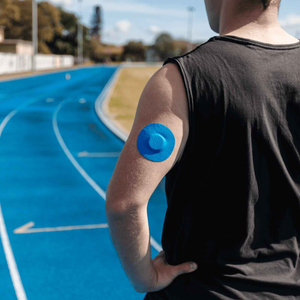
A patch peeling overnight is an adhesion problem, not a placement problem, and the fix lives entirely in skin prep and product choice rather than in where you put the sensor. The most common causes are applying to skin that isn't fully clean and dry, sleeping in a way that puts repeated friction on one edge, and heat and sweat building up under an occlusive patch overnight. A device-matched overpatch with a breathable backing addresses the friction and moisture side of this directly; it does nothing for compression lows, since that's a pressure-on-tissue issue the patch sits outside of entirely. Worth repeating, because it's easy to conflate the two: a stronger patch will never stop a compression low, and better placement will never stop a patch from peeling if the skin prep underneath it was rushed.
Prep before bed, as a short routine
A few minutes before sleep meaningfully reduces morning peeling:
-
Apply new sensors and patches at least an hour before bed, not right as you're about to sleep, so the adhesive has time to properly bond.
-
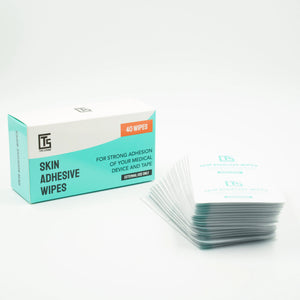
Clean the site with an alcohol wipe and let it dry completely before anything goes on. Skin adhesive wipes work well here if you tend to run warm overnight.
-
Avoid moisturiser or lotion near the site in the hours before bed.
-
Smooth down the full edge of the patch firmly once it's applied, rather than just pressing the center.
Our full guide on how to prep your skin for patches covers the complete routine in more depth.
Compression versus peeling: two problems, two answers
It's worth keeping these two completely separate, since they get confused constantly and the fixes don't overlap. Compression is pressure on the sensor itself, changes your readings temporarily, and is solved by placement, specifically by sleeping less directly on top of it. Peeling is the patch's adhesive failing, doesn't touch your readings at all, and is solved by skin prep and a well-fitted overpatch. A patch, however good, will never prevent a compression low, and repositioning your sensor will never fix a peeling adhesive. If you're dealing with both, they need two separate changes, not one product doing double duty.
When to put a new sensor on for an undisturbed first night
If you're inserting a new sensor before bed, check your device's warm-up time and make sure it's complete before you go to sleep, rather than falling asleep mid-warm-up and getting an incomplete first night of data. Dexcom G7 and ONE+ both have a roughly 30-minute warm-up; FreeStyle Libre 2 Plus and Libre 3 Plus take about 60 minutes. Applying two to three hours before bed generally gives both the warm-up and the adhesive bond time to finish before you're lying on it, which is a more reliable buffer than the bare minimum warm-up window alone.
Universal tips for all CGM users
A handful of habits help regardless of which device or patch you're using:
-
Stick to light, well-fitted pajamas to reduce fabric friction against the patch edge overnight.
-
Change patches during the day when possible, rather than always mid-sleep-cycle, so you're not troubleshooting a fresh application in the dark.
-
Avoid applying lotion near the site in the hours before bed.
-
A body pillow or wedge can take pressure off your sensor side if you're a committed side sleeper who can't easily switch sides.
People also ask
What happens if I sleep on my CGM? Lying directly on a sensor for a sustained period can cause a compression low: pressure temporarily restricts blood flow and interstitial fluid around the sensor, producing a false low reading. It typically resolves within 10 to 15 minutes of shifting your weight off the site and isn't a sign anything is wrong with the sensor.
Where do you put a CGM if you sleep on your side? Place it on the arm or thigh you don't habitually sleep on, or consider the abdomen if approved for your device and you tend to switch sides through the night. This reduces how often the sensor ends up under sustained pressure without eliminating the possibility entirely.
When is the best time to put on a CGM before bed? Apply it two to three hours before sleep if possible. That covers the device's warm-up time (roughly 30 minutes for Dexcom G7 and ONE+, about 60 minutes for FreeStyle Libre 2 Plus and Libre 3 Plus) and gives the adhesive time to bond before you're lying on it overnight.
Will my blood sugar go down if I sleep? Blood sugar naturally fluctuates overnight due to normal hormonal changes, but a sudden, sharp drop on your CGM graph that recovers just as quickly once you change position is much more likely to be a compression low than a genuine drop in blood glucose. If you have no physical symptoms of a low and the reading self-corrects after repositioning, that pattern points to compression rather than an actual low.
Can I sleep on the side with my CGM? Yes, but if you consistently sleep on the same side as your sensor, expect more frequent compression lows on that side specifically. Switching your next sensor to the opposite arm or thigh is the most direct fix.
Why does my patch keep peeling off by morning? This is almost always a skin-prep or adhesive issue, not a placement one. Check that skin was fully clean and dry before application, avoid sites with heavy friction from bedding or waistbands, and consider a breathable, device-matched overpatch if moisture buildup overnight is the main culprit.
References
-
Mensh, B.D., Wisniewski, N.A., Neil, B.M., Burnett, D.R. "Susceptibility of Interstitial Continuous Glucose Monitor Performance to Sleeping Position." Journal of Diabetes Science and Technology, 2013;7(4):863-870.
-
Dexcom. "How do I keep my sensor on for the full 10-day wear?" dexcom.com
-
American Diabetes Association Professional Practice Committee. "Diabetes Technology: Standards of Care in Diabetes." Diabetes Care, 2024;47(Suppl 1):S126-S144.


