


Why CGM Use Is Rising Fast Among People With Type 2 Diabetes

For many adults living with type 2 diabetes, management has long relied on periodic finger prick checks, delayed feedback, and a lot of educated guesswork. You make choices about food, movement, stress, and medication without always seeing how those decisions play out in real time.
That gap is one of the main reasons CGM for type 2 diabetes is rising so quickly.
Continuous glucose monitoring does not just show numbers. It shows patterns. And for many people, seeing those patterns changes how confident and informed daily management feels.
Why CGM for type 2 diabetes adoption is accelerating
The rise of CGM for type 2 diabetes is not about technology for technology’s sake. It reflects unmet needs in traditional care.
From snapshots to context
Finger prick testing captures single moments. CGM captures direction, duration, and recovery.
For people with type 2 diabetes, this matters because glucose changes are often gradual and influenced by multiple factors acting together. A single test before breakfast cannot explain a slow overnight rise. A post meal test may miss a delayed spike hours later.
CGM for type 2 diabetes fills those gaps by showing how glucose behaves over time. This context helps explain why certain days feel harder to manage than others.
Understanding food response is often the first breakthrough. In how food affects your blood glucose levels according to your CGM, we show how CGM reveals personal responses that standard advice cannot predict.
Behaviour change driven by visibility, not pressure
One reason CGM for type 2 diabetes is gaining traction is that it supports behaviour change without judgement.
Instead of being told what to do, you can observe what happens. That shift from instruction to insight is powerful. Small adjustments become easier to test and less emotionally loaded.
This is especially relevant for movement. Many adults assume exercise must be intense to matter. CGM data often shows the opposite. Light, consistent activity can have meaningful effects.
That principle is explored in desk job steady sugar micro moves that reduce all day highs, where CGM helps validate realistic movement choices.

Lower cognitive load in everyday life
Type 2 diabetes management often involves constant internal calculations. What did I eat. Did I move enough. Why is this higher today.
CGM for type 2 diabetes reduces that mental strain by making glucose behaviour visible. Instead of guessing, you can see whether stress, poor sleep, skipped meals, or timing played a role.
For people experiencing burnout, this reduction in background mental effort can be as valuable as any clinical metric.
When managing your diabetes becomes exhausting and how tech habits ease it explores this emotional dimension in depth.
How CGM for type 2 diabetes supports daily decision making
CGM for type 2 diabetes does not require drastic lifestyle changes to be useful. It works best when integrated into normal routines.
Food without moral judgement
CGM data reframes food from something to control into something to understand.
Rather than categorising foods as good or bad, CGM shows how portion size, timing, and combinations affect glucose. This helps many people reduce guilt while still making informed choices.
During periods of social pressure or disrupted routines, how to build a CGM friendly holiday plate without feeling deprived demonstrates how CGM insight can support balance without restriction.
Movement that fits real bodies and schedules
CGM for type 2 diabetes highlights that movement does not need to be extreme to be effective. Seeing a post meal walk flatten a glucose curve reinforces habits that feel achievable.
This feedback loop helps many people move more consistently because the reward is visible.
Medication awareness and timing
For adults using oral medications or injectables, CGM for type 2 diabetes can help clarify how timing influences glucose trends. This can support more precise, confident conversations with healthcare teams without self blame.
Who is adopting CGM for type 2 diabetes
CGM for type 2 diabetes is now used across a wide range of life stages and care pathways.
|
Group |
Why CGM helps |
|
Newly diagnosed adults |
Builds understanding early |
|
People adjusting medication |
Shows real world response |
|
Adults with unexplained highs |
Reveals hidden patterns |
|
Those managing burnout |
Reduces decision fatigue |
|
Partners and carers |
Improves shared insight |
What many people report first is not better numbers, but greater calm.
Access barriers still shape uptake
Despite growing evidence, CGM for type 2 diabetes access remains inconsistent. Funding criteria in many regions still prioritise insulin use rather than demonstrated benefit.
This mismatch is explored in why some people still struggle to access CGMs in the UK, where policy decisions intersect with lived experience. As research continues to expand, pressure is growing for access models that reflect how CGM is actually used.
Wear confidence affects long term success
As more adults adopt CGM for type 2 diabetes, practical wear issues become more visible. Many people stop using CGM not because of the data, but because of discomfort, irritation, or sensors lifting early.

Good skin preparation is foundational. How to prep your skin for patches the right way to make them last outlines steps that reduce irritation and improve wear consistency.
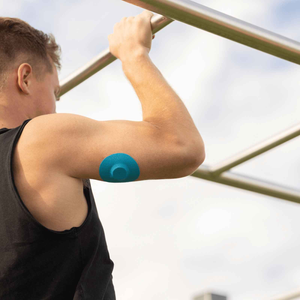
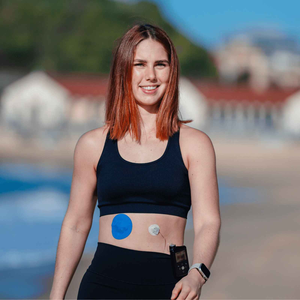
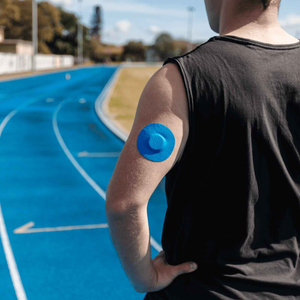
Many users also add protection with CGM patches to keep sensors secure during sleep, work, and everyday movement.
For people with sweat or sensitive skin, skin adhesive wipes can improve adhesion while supporting skin comfort when used correctly.
These supports are not about optimisation. They help make CGM sustainable.
Why this trend matters
The rise of CGM for type 2 diabetes reflects a broader shift in how people want to manage chronic conditions. Tools that reduce guesswork, respect lived experience, and support understanding are becoming central to care.
CGM for type 2 diabetes is not about chasing ideal numbers. It is about seeing clearly, making informed choices, and feeling more supported day to day.
References
Cleveland Clinic 2024, Continuous glucose monitoring (CGM), Cleveland Clinic, viewed online
https://my.clevelandclinic.org/health/articles/continuous-glucose-monitoring-cgm
Martens, T, Beck, R, Bailey, R et al. 2024, Expanding the role of continuous glucose monitoring in type 2 diabetes care, Current Diabetes Reports, vol. 24, no. 2, viewed online
https://pmc.ncbi.nlm.nih.gov/articles/PMC12565403/
Zhu, T, Li, J, Chen, Y et al. 2025, Use of continuous glucose monitoring in people with type 2 diabetes: clinical outcomes and behavioural insights, Diabetes Research and Clinical Practice, viewed online
https://www.sciencedirect.com/science/article/pii/S0168822725001251


