

How to Prep Your Skin for Patches: The Right Way to Make Them Last

How long a patch holds is mostly decided in the minute before it goes on. Clean, dry skin gives the adhesive a fair surface to grip. Skin with a film of oil, lotion or sweat on it gives it less, so the patch has to work harder from the start. Skin prep is the easiest part of CGM wear to skip, and the one that quietly makes the biggest difference. It takes about a minute. Here's how to get your skin ready so a Type Strong patch holds comfortably for its full wear, and what to do on the rare day one comes away sooner than you'd like.

The short version: clean, dry, flat skin
To prep your skin for a CGM patch, clean the area with plain water or a fragrance-free wipe, let it dry fully, then pick a flat, low-movement spot your device is made for. That’s most of the work.
Skin that’s free of oil, lotion and sweat gives the patch’s adhesive ring a clean surface to grip, and dry skin holds far better than damp. Everything below is just the detail behind those few steps.

Why a clean, dry surface helps a patch hold
A Type Strong patch sticks to your skin, not to the sensor, so the skin around the site is the surface that matters. Body oil, leftover moisturiser, a film of sweat: each one sits between that skin and the patch’s adhesive ring, and that’s what tends to shorten wear. None of it’s a failing on your part. It’s just what skin does across a normal day. A quick clean and a thorough dry give the patch a fair surface to bond to, and honestly that’s the single biggest thing you can do to help it last.

Five steps to prep your skin before a patch
None of these take long, and once they’re habit you’ll barely notice them.
1. Pick a flat, low-movement spot. Somewhere flat that doesn’t stretch, fold or rub through the day holds best, on a site your device is approved for. Skin under a waistband or over a joint works against any patch. Steer clear of very hairy areas too, where the patch’s adhesive ring can’t reach the skin cleanly. There’s more on hairier skin if that’s your situation.
2. Clean the skin. Wipe the area with plain water and a fragrance-free soap, or a simple alcohol wipe, to lift off oil, lotion and sweat. Skip anything scented or moisturising. If you use an alcohol wipe, let it dry off completely before the next step.
3. Dry it properly. Give the skin a moment to dry fully, with a clean towel or just air. Damp skin is the most common reason a patch doesn’t grip from the start, and it’s the easiest to fix.
4. Keep moisturiser and oils off the site. Lotions, body oils and sunscreen leave a thin film the patch’s adhesive ring can’t grip. On patch-change day, keep them away from the spot and put them everywhere else.
5. Give it time to settle. Once it’s on, press the patch down, then give it a little while before water or a heavy workout. Type Strong patches are water resistant and hold through showers, sweat and quick dips, but the bond is strongest once it’s had time to set.
If you’re still deciding which patch suits your sensor, the Type Strong CGM patches range is grouped by device so you can match the footprint.

Where you place the patch matters more than which device you wear
Prep is much the same whether you wear a Dexcom, a FreeStyle Libre, a Medtronic Guardian or an Omnipod. Each Type Strong patch is pre-cut to its sensor’s footprint, so it covers the whole sensor without trimming and sticks to the skin around it. What changes from person to person isn’t the device, it’s the spot. Stick to the areas your device is made for, then within those, pick the calmest one: away from a backpack strap, a waistband, or the side you sleep on. This CGM placement guide walks through where to wear your sensor for steady readings and comfortable wear.
Barrier and prep wipes, especially for sensitive skin
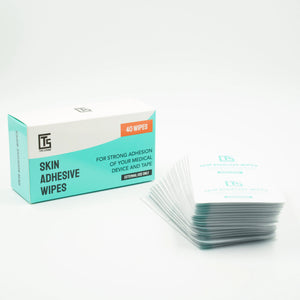
If a clean, dry start still isn’t quite enough, a skin prep wipe can give the patch’s adhesive ring more to hold onto. Type Strong’s Skin Adhesive Wipes are a prep step, not a remover: wipe the skin around the site, let it dry to a light tack, then apply the patch over the top. One thing to watch with any wipe or barrier is to keep it on the skin around the sensor, not over the small point where the filament goes in, so nothing gets in the way of the reading. If your skin tends to react to adhesives, patch-test a new product on a small area first, and it helps to know the signs of a skin reaction so you can tell ordinary dryness from irritation that needs a break.

If a patch comes away sooner than you’d like
When one lets go early, it’s almost always an everyday condition rather than a prep mistake or a flaw in the patch. The usual suspects are water or sweat too soon after applying, a leftover film of lotion, or a high-friction spot, and each has a simple fix: give a fresh patch a little longer to set, clean and dry the skin a touch more thoroughly. Type Strong’s patches are built to hold 10+ days, so it’s fair to expect one to see most sensors through. If you’re not sure what’s realistic, here’s what to expect from patch wear over time.
The quiet habit that keeps your sensor on
Skin prep isn’t complicated. Clean skin, dry skin, a sensible spot, firm pressure: that’s most of it, and the rest is finding the routine that fits your day. When you’re ready to match a patch to your sensor, you can browse the full Type Strong patch collection by device.
People also ask
How should I prep my skin before applying a CGM patch? Clean the area with plain water or a fragrance-free wipe, let it dry completely, then choose a flat spot with little movement that your device is made for. Keep lotion, oil and sunscreen off the site, since they leave a film the patch’s adhesive ring can’t grip.
Should I shave the area first, and when? If the spot is hairy, trim or shave it a day before applying, so the skin has settled and isn’t freshly nicked. The patch grips skin, not hair, so a clean surface helps it hold.
Is soap and water enough, or do I need an alcohol wipe? For most people, fragrance-free soap and water is enough, as long as the skin is rinsed clean and dried fully. An alcohol wipe helps if your skin is oily or you sweat a lot, just let it dry off completely before the patch goes on.
How long should I let the skin dry before applying? Let the skin dry fully, which usually takes a minute or two after washing, or a few seconds after an alcohol wipe. Applying to damp skin is the most common reason a patch doesn’t grip from the start.
Can I use a skin prep or barrier wipe if I have sensitive skin? Yes, though it’s worth patch-testing a new product on a small area first. Keep any wipe or barrier on the skin around the sensor rather than over the point where the filament goes in, and stop if you notice irritation.
Why did my patch come away early, even though I cleaned my skin? Coming away early is almost always an everyday condition rather than a prep mistake or a flaw in the patch: water or sweat too soon, a leftover film of lotion, or a high-friction spot. Give a fresh patch a little longer to set and try a calmer site, and it should hold as expected.
Does heat and humidity change how I should prep? Heat and humidity make skin sweatier, so cleaning and drying matter even more, and a prep wipe can help in warm weather. There’s more on protecting a sensor in hot conditions in this guide to summer CGM wear.


