

How Long Should a CGM Patch Last? What to Expect

How long a patch should last is one of those questions you don't think to ask until you need the answer. Usually that's the day you're counting on a sensor and quietly wondering whether the patch will see it through. So here's the short version, and it's calmer than the worry. A Type Strong patch is built to hold 10+ days, the same on every device, which means one patch comfortably covers a sensor from start to finish.
The rest is just two ideas: why the patch and the sensor run on separate clocks, and the handful of small things that help you get the full wear. A minute of skin prep is most of it.

How long should a CGM patch last?
Ten days, at least. A Type Strong fabric patch is designed to hold 10+ days, and that number doesn't shift from one device to the next, because every fabric patch is the same material underneath. It's a floor, not a ceiling, so plenty of people get more.
That's the whole answer, and it's meant to be easy to carry around. No separate wear time for a Dexcom patch and a Libre patch. Just 10+ days, whatever you wear.

Patch wear and sensor wear are two different clocks
Here's the part that trips people up. The patch and the sensor aren't on the same countdown.
Your sensor is the medical device, the CGM itself. It sits under the skin on a fine filament, carries its own adhesive, and runs for a set time before you swap it, however long its maker allows.
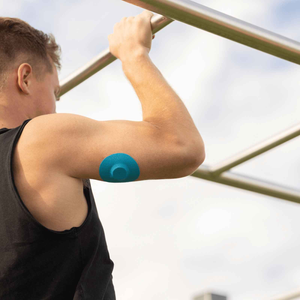
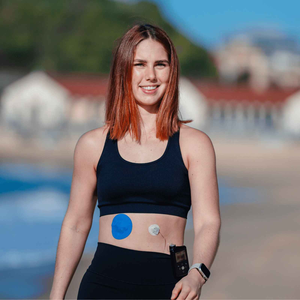
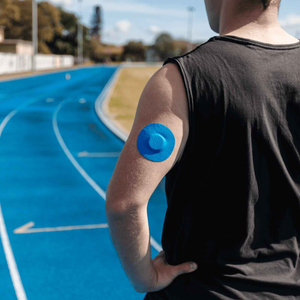
The patch is the overpatch that goes over the top: a non-stick centre across the sensor, an adhesive ring on the skin around it, holding everything flat. One doesn't set the clock for the other.
So the question worth asking isn't how long does it last. It's which one. The patch holds 10+ days. The sensor runs its own cycle and then gets replaced. On most devices the patch outlasts that cycle, so a single patch sees a single sensor all the way through.

What can cut a patch's wear short, and the easy fix
When a patch comes away earlier than you'd like, it's almost never something you did. It's usually just what skin gets up to over a day, and every cause has a simple answer.
• A little natural oil or leftover moisturiser, which leaves the adhesive less to hold. Clean, dry skin fixes it.
• Water or heavy sweat too soon after applying. An hour to settle first lets the bond set properly.
• Friction from a waistband, a strap, a sleeve sitting over the site. A flatter, calmer spot holds far better.
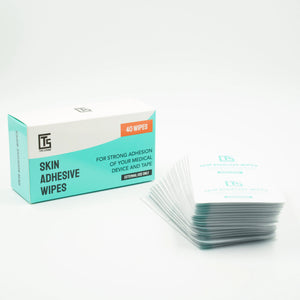
• A hot, sweaty day. A skin adhesive wipe before you apply gives the patch more to grip.
None of it's a flaw in you or in the patch. It's the conditions the patch is working in, and small changes tilt the odds back your way.

A simple routine for the full wear
Most of the difference is made in the first minute, before the patch even meets the sensor.
1. Start with clean, dry skin: plain soap, no moisturiser on the spot, dried fully.
2. If your skin runs oily, or you sweat a lot, run a skin adhesive wipe over the area first.
3. Press the patch down for 30 to 60 seconds, so the whole ring warms and grips.
4. Pick a flat, calm spot you're not forever knocking or folding.
5. Apply when you're cool and dry, not fresh out of the shower.
Do that and the patch mostly fades into the background, through showers, sweat, and an ordinary week.

The bottom line
So, at least 10 days, the same across the range, usually more. Keep the patch and the sensor as two clocks in your head, give the patch a clean, dry start, and it takes care of the rest.
That's really the point of a good overpatch. Not a number to chase, just one less thing to manage, and a bit more trust that your sensor will still be there when you need it. When you're ready to match a patch to your sensor, the CGM Patches range is grouped by device.
People also ask
How long do Type Strong CGM patches last?
At least 10 days. The fabric patches are built to hold 10+ days, the same across the range, and that's a floor, so plenty of people get more.
Is the patch's wear the same as my sensor's?
No, they're two separate clocks. The patch holds 10+ days; the sensor runs for whatever time its maker sets. One doesn't decide the other.
Do I need a different patch for each CGM?
No. The fabric patches are the same material and the same 10+ day hold. You pick the one shaped to fit your device, not a longer-lasting one.
Can one patch last a full sensor?
Yes. On every device, one patch comfortably covers a sensor from start to finish, since the patch holds 10+ days.
Why did my patch come away early?
Usually an everyday thing: a little oil or moisture on the skin, water too soon after applying, or friction from a waistband or strap. None of it's a flaw in you or the patch, and each one has a simple fix.
Are Type Strong patches waterproof?
They're water resistant, not waterproof. They hold through showers and quick dips, and it's heavy, ongoing water exposure that wears at the bond over time.


