

What is a CGM and how does it work? (Beginner’s guide 2026)

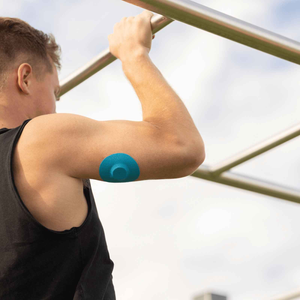
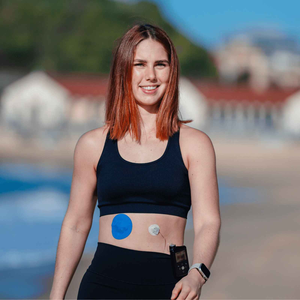
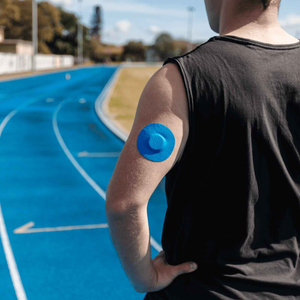
If you have just started continuous glucose monitoring, the first thing you notice is the small device attached to your skin. That small device includes a cgm patch.
For many people, especially those newly diagnosed or supporting a child, the questions come quickly:
-
What is a cgm patch?
-
How does it actually work?
-
Does the needle stay in?
-
How accurate is it?
-
How long should it last?
Let us break it down clearly and calmly so you understand exactly how a cgm patch works and what it does for you.
What is a CGM?
A CGM is a Continuous Glucose Monitor. It tracks glucose levels throughout the day and night without repeated finger pricks.
Instead of checking your glucose occasionally, a CGM gives ongoing readings, trend arrows, and alerts.
At the centre of this system is the cgm patch. This adhesive base keeps the sensor secure against your skin so it can continuously measure glucose in the fluid just under the surface.
These are often called:
-
continuous glucose monitoring patches
-
cgm adhesive patches
-
sensor patches
-
glucose monitoring patches
If you are comparing devices, reviewing best CGMs in 2025 can help you understand how systems differ.
What is a cgm patch?
A cgm patch is the adhesive component that secures the glucose sensor to your body.
It does not deliver insulin.
It does not inject medication.
It simply supports glucose measurement.
During insertion, a small needle places a flexible filament just under the skin. The needle is removed immediately. What remains is soft and designed for comfort. The cgm patch keeps that filament stable so readings remain consistent.
If the cgm patch lifts or shifts, the sensor may move, which can affect accuracy.
How does a CGM actually work?
A CGM system has three main parts:
-
Sensor – a tiny filament inserted under the skin
-
Transmitter – sends glucose data wirelessly
-
Receiver or smartphone app – displays the readings
Once applied, the cgm patch keeps the sensor securely in place. The filament measures glucose levels in interstitial fluid, not directly in the bloodstream.

Every few minutes:
-
The sensor detects glucose levels
-
The data is converted into a signal
-
The transmitter sends it to your device
-
You see a reading and trend direction
This allows you to monitor:
-
Current glucose level
-
Rising or falling trends
-
High alerts
-
Low alerts
-
Overnight patterns
According to Diabetes Australia (2023), continuous glucose monitoring provides real-time glucose data that supports safer glucose management decisions.
A stable cgm patch is essential for keeping those readings reliable.
How accurate is a cgm patch system?
Accuracy is measured using MARD - Mean Absolute Relative Difference.
Lower MARD percentages indicate greater accuracy. Many modern CGM systems report values below 10 percent, which is considered reliable.
However, accuracy depends on:
-
Correct insertion
-
Stable adhesion
-
Avoiding compression while sleeping
-
Full sensor wear time
If your cgm patch lifts early, readings may fluctuate.
If you notice frequent lifting during hot weather, reviewing extra protection in summer can help.
How long does a cgm patch last?
Different systems have different wear durations.
|
Sensor type |
Typical wear time |
Adhesion importance |
|
7 day system |
7 days |
Moderate |
|
10 day system |
10 days |
High |
|
14 day system |
14 days |
Very high |
A cgm patch should ideally stay secure for the full duration. Early lifting can reduce sensor time and increase replacement frequency.
For more detail, see how long a CGM patch should last.
Why do some people reinforce their cgm patch?
Daily life affects adhesion.
Sweat, exercise, swimming, humidity, and friction from clothing can all weaken a cgm patch.
Mid-way through your sensor cycle is often when lifting starts.
If you want added security during workouts or busy days, you can explore reinforcement options within the cgm patches collection.
These are designed to support continuous glucose monitoring patches without changing your device.
Skin preparation also matters. Reviewing skin preparation before applying a cgm patch can improve wear time.
If lifting is recurring, understanding weak patch signs may help you identify the issue early.
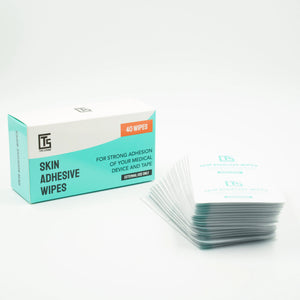
For improved adhesion on sensitive skin, tools such as adhesive wipes can help create a stronger grip.

Does wearing a cgm patch hurt?
Insertion is usually described as a brief pinch.
After placement, the cgm patch should not cause ongoing pain. Mild tenderness in the first 24 hours can be normal. Persistent redness or itching may indicate sensitivity.
The NHS (2024) confirms CGM devices are safe and appropriate for many people when used correctly.
CGM vs finger prick testing
A finger prick gives one reading at one moment.
A CGM provides:
-
Continuous readings
-
Trend arrows
-
Alerts for highs and lows
-
Overnight monitoring
-
Pattern recognition
The American Diabetes Association (2023) reports that CGM use is associated with improved glycaemic outcomes in many people with type 1 diabetes.
A secure cgm patch ensures that monitoring remains uninterrupted.
Final thoughts
Your first cgm patch can feel unfamiliar. That is completely normal.
Over time, it becomes part of your routine. It becomes data. It becomes reassurance. It becomes patterns that help you understand your body more clearly.
If you want extra confidence that your cgm patch will stay secure through daily life, exercise, or travel, you can explore supportive reinforcement options within the cgm patches collection.
Learning how your cgm patch works is the first step toward feeling more in control and less uncertain.
References
American Diabetes Association (2023) Standards of Care in Diabetes 2023. Available at: https://diabetesjournals.org/care/article/46/Supplement_1/S1/148030 (Accessed: 6 January 2026).
Diabetes Australia (2023) Continuous glucose monitoring. Available at: https://www.diabetesaustralia.com.au/continuous-glucose-monitoring/ (Accessed: 6 January 2026).
NHS (2024) Continuous glucose monitoring. Available at: https://www.nhs.uk/conditions/type-1-diabetes/continuous-glucose-monitoring/ (Accessed: 6 January 2026).


