

Is Type Strong Better Than Other CGM Patches?

Most CGM patches do not fail on day one. They fail quietly a few days in, when edges start lifting, adhesion weakens, and you begin adjusting it more than you should.
That is where the real difference between patches shows.
Type Strong patches are designed to reduce that drop-off. Not by being the most aggressive adhesive, but by staying more stable as your routine, environment, and skin change over time.
Where most CGM patches fail
Across different CGM adhesive patches, the pattern is usually the same. Initial adhesion is strong, but performance becomes less predictable as the wear cycle progresses.
Common issues include:
-
Edge lifting after a few days of movement
-
Adhesion weakening with sweat, water, or humidity
-
Friction from clothing or sleep positions
-
Skin oil and natural turnover reducing stick
These are normal limitations of any CGM cover patch. They are not usually caused by incorrect application.
If you are seeing these patterns regularly, it is often a sign your patch is not built for longer, real-world wear. You can confirm this in 5 signs your CGM patch is too weak for daily life.
Where Type Strong patches have an advantage
Type Strong patches are designed around how adhesion behaves over time, not just how it performs at the start.
More consistent adhesion curve
Instead of a strong start followed by rapid decline, Type Strong patches aim for a more even level of adhesion across the wear cycle.
Reduced edge stress
Edge lifting often begins due to uneven tension. A more flexible CGM cover patch helps reduce this, especially during movement or sleep.
Better moisture handling
Sweat and humidity are major factors in patch failure. Breathable structure helps reduce moisture build-up, which supports longer adhesion.
Device-specific fit
Patches designed for freestyle libre sensor patches, dexcom patches, and omnipod adhesive patches reduce unnecessary strain around the sensor.
This combination does not eliminate failure, but it helps delay and reduce it.

What this means in everyday use
The difference with Type Strong patches is not dramatic. It is cumulative.
Over a full wear cycle, you may notice:
-
Edges staying down longer
-
Less need to press or adjust your patch
-
Fewer moments where the patch feels unreliable
-
More consistent performance across different days
This is especially noticeable if your current CGM adhesive patches tend to degrade mid-cycle.
If you are using newer sensors, fit also plays a role. Dexcom G7 users: why regular patches don’t always work explains this in more detail.
When the difference becomes clearer
Type Strong patches tend to perform more noticeably better when conditions are less controlled.
This includes:
-
Exercise or frequent movement
-
Warm or humid environments
-
Regular showering or swimming
-
Longer expected wear duration
-
History of patches lifting early
In these situations, standard CGM adhesive patches are more likely to fail earlier or become inconsistent.
A more stable CGM cover patch helps reduce that variability.
Where expectations should stay realistic
If your current CGM adhesive patches already last the full cycle without issues, the difference may be small.
This often applies if you:
-
Have lower activity levels
-
Sweat minimally
-
Maintain consistent indoor conditions
-
Already use strong skin prep routines
No patch, including Type Strong patches, can guarantee perfect wear in every condition.
Supporting better patch performance
Even a well-designed CGM cover patch performs better with proper preparation.
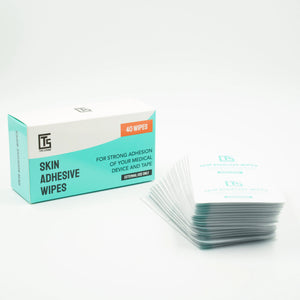
Using skin adhesive wipes can improve how evenly the adhesive bonds to your skin.
You can also improve outcomes by following how to prep your skin for patches, especially if you have experienced inconsistent wear.

Choosing the right patch for your device
Fit matters more than most people expect. A poorly fitted patch increases tension and leads to earlier lifting.
Options include:
Matching your CGM cover patch to your device helps improve stability and comfort.
The realistic takeaway
Type Strong patches are not designed to be the strongest possible option.
They are designed to be more consistent across real-life conditions.
That means fewer small failures building up over time, rather than a completely different experience on day one.
If your current CGM adhesive patches already meet your needs, you may not need to switch.
But if you are dealing with lifting, sweat, or unpredictable wear, Type Strong patches are built to handle those conditions more reliably.


