

CGM Patches for Swimmers and Triathletes: Pool, Saltwater, and Open-Water Wear

If you wear a CGM patch when you swim, you have probably climbed out of the pool or come out of the surf and found an edge starting to lift. The reading may be fine for now, but the CGM no longer feels as secure as it did an hour ago. For swimmers and triathletes, that is one of the most familiar frustrations of keeping a CGM on in the water.
The reality is that it is rarely the water itself that loosens the patch. It is the chemistry, the friction, and the handling around the water that does most of the work on the patch’s adhesive.
The good news is the CGM itself is built to handle being wet. The patch is the part that needs your attention, and the patch edge is where to focus.
This guide covers how pool, saltwater, and open water each affect a patch, the wear routine for each, and a simple four-phase plan for triathletes from race-week prep to the final run.

Can you swim with a CGM?
Yes. The Dexcom G7 is rated to stay submerged at around 2.4 metres (8 feet) for up to 24 hours, and the FreeStyle Libre 3 at 1 metre for 30 minutes. The sensor keeps working underwater.
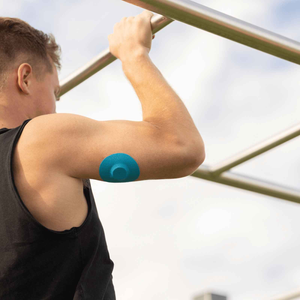
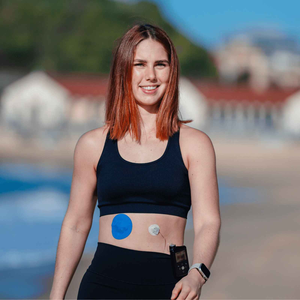
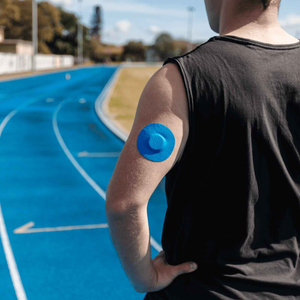
What struggles is the CGM’s adhesive holding it to your skin. This is why most swimmers and triathletes apply an overpatch on top of the sensor, to hold the CGM secure through chlorine, salt, and friction. If the word “waterproof” on a patch box has let you down before, the truth about patch claims is worth a read.

Pool, saltwater, and open water each affect a patch differently
Where you swim matters more than how long you swim.
Each environment works at the adhesive in its own way:
-
Pool water is chlorinated, and chlorine slowly weakens the patch’s adhesive over repeated sessions
-
Saltwater is gentler chemically, but salt can dry at the edge and lift it
-
Open fresh water is the easiest of the three, though sediment can work into the edges
As a rule, pool swimmers tend to lose adhesive fastest, saltwater swimmers next, open fresh water last. Plan to replace a patch by how and where you swim, not just by the sensor’s wear cycle.
The pool chlorine ranges are set by CDC Healthy Swimming guidance, and the chlorine versus saltwater breakdown goes deeper if you want it.

Pool wear routine
If you are a regular pool swimmer, a short routine before and after each session makes the biggest difference.
Before the pool
-
Clean the patch area with an alcohol wipe
-
Let the skin air-dry fully
-
Apply the overpatch and press the edges firmly
In the pool
-
The water itself is not the threat
-
Cap straps, goggle straps, and lane-line contact lift the edge
-
Placement matters more than stroke
After the pool
-
Rinse with fresh water soon after you get out
-
Pat dry, do not rub the edge with a towel
If an edge starts to curl mid-week, the fix is usually in the skin prep, not the patch brand. How to prep your skin for patches covers it. For Dexcom wearers, the Dexcom G7 and ONE+ patches are sized to cover the sensor with a non-stick centre and hold well through pool sessions with good prep.

Saltwater and open-water wear routine
Ocean and open-water swimmers face a different mix: salt at the edge, longer time in the water, wetsuit contact, and wave impact with every stroke.
Before the swim
-
Clean, dry the skin, and press the edges firmly
-
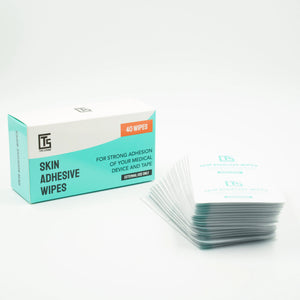
A barrier wipe under the patch helps if you have a history of edge lifting
-
Place the patch on the back of the upper arm, not the forearm
Wetsuit and gear
-
Place the patch clear of the wetsuit zip line, not under it
-
Move the patch off any seam or strap that sits on the edge
-
Friction can irritate the skin too, and community fixes for that help
After the swim
-
Rinse the salt off with fresh water as soon as you can
-
Pat dry, do not scrub the edge
Salt left to dry on the edge is one of the most common causes of a patch failing after an ocean swim.
FreeStyle Libre wearers doing regular ocean sessions should plan to replace the patch sooner than the standard 10-day wear, since salt accelerates lift at the edges. The FreeStyle Libre sensor patches still hold the sensor through repeat exposure when refreshed on time.
A four-phase plan for triathletes
A triathlon is the hardest test of a patch, because the kit and the transitions matter as much as the water. Here is a simple plan across the day.
Phase 1: race-week prep
-
Apply the overpatch a day or so before the race
-
Do not shave the patch area within a day of applying
-
Keep moisturiser, oil, and sunscreen off the patch zone beforehand
-
Check the patch against your race kit, and move it if a seam or belt sits on the edge
Phase 2: the swim
-
Place the patch on the upper arm, clear of the wetsuit zip and above the trisuit seam
-
Leave it alone on race morning, since a freshly applied patch does not bond as well as one that has had a day to set
-
Check the current USA Triathlon guidance if wetsuit rules are in question for your distance
Phase 3: the first transition
-
Pat the patch zone dry, do not scrub the edge
-
Keep sunscreen off the patch edge, since it can weaken the adhesive
-
Give the edge a quick look before mounting the bike
-
Keep a spare in your transition bag, since active users always carry a spare
Phase 4: bike to run
-
Heat and sweat at the edge tend to loosen a patch on the bike more than motion does
-
Moving to the run shifts where your kit rubs, and a belt that sat fine on the bike can catch the edge
-
Check the edge again before the run, and press it down if it shows any curl
-
If a patch lifts fully, switch to your spare, do not try to re-stick over sweat
Most of the time the patch holds through the swim and the bike. The failure tends to come later, when a seam or belt has been sitting on the edge for hours.
Plan for the seam, not the water.

When to add a second layer
For most swims and shorter races, the overpatch on its own is enough. A second layer helps only at the long end.
-
Overpatch only: pool swimmers, sprint and Olympic-distance triathletes, and open-water swims under about 90 minutes
-
Overpatch plus a barrier wipe underneath: only if you keep getting edge lift at the same spot across sessions
-
Overpatch plus a strip of tape over the top: for full Ironman swims and long open-water races
Do not stack three layers. If it takes three products to hold a patch, the routine has a gap, and the skin prep usually fixes what the extra layers are trying to mask.
Common failures and how to recover
A few failures account for most lost patches in the water. Each has a simple response.
-
Edge lift after the first transition: pat dry and press the edge for half a minute. The most recoverable one.
-
Salt drying at the edge: rinse with fresh water soon after an ocean swim. Once salt has dried hard on the edge, the hold is already compromised.
-
Wetsuit zip pull: there is no fix mid-race, only prevention. Place the patch clear of the zip on race morning.
-
Sunscreen on the edge: keep it off the perimeter, since it can break the bond. If it gets on and the edge lifts, switch to your spare.
-
A full lift on the bike or run: a fully lifted patch with sweat under it rarely re-sticks reliably. Use a spare. If patches already lift in training, the signs your patch is too weak is the place to start.
The bottom line
Swimming and racing with a CGM should feel manageable, not like one more thing to worry about. The CGM handles the water. The patch is the part that needs a little care, and a few small habits keep the CGM in place through the swim, the bike, and the run.
With the right prep, the right placement, and a spare on hand, the patch becomes one less thing to manage, leaving room for the session itself.
That is what Type Strong is for: small support that helps make life with diabetes a little easier. The full CGM patch range matches by device.
People also ask
Can you swim with a CGM?
Yes. The Dexcom G7 and FreeStyle Libre 3 are rated for water, and the sensor keeps reading. The CGM’s adhesive is what needs help, which is why most swimmers apply an overpatch on top of the sensor for backup.
Which CGM patch is best for swimming?
The one sized for your device. A Dexcom patch fits a Dexcom sensor, a Libre patch fits a Libre, so the edges are sealed where swim failures usually start.
How do you keep a CGM on during a triathlon?
Apply the overpatch a day before, place it clear of the wetsuit zip for the swim, check the edge in transition, and carry a spare.
Does saltwater ruin patch adhesive faster than chlorine?
They work differently. Chlorine tends to weaken the bond over repeated pool sessions, while salt lifts the edge if it dries on the skin.
Where should you wear a CGM for open-water swimming?
The back of the upper arm. It sits above the main stroke-impact zone and clears the wetsuit zip line.
References
-
Dexcom (2026) Can I swim and bathe with Dexcom G7 (IP28 water resistance). Available at: https://www.dexcom.com (Accessed: 28 May 2026).
-
Abbott (2026) FreeStyle Libre 3 product information (IP27 water resistance). Available at: https://www.myfreestyle.com (Accessed: 28 May 2026).
-
Centers for Disease Control and Prevention (2024) Healthy Swimming. Available at: https://www.cdc.gov/healthy-swimming (Accessed: 28 May 2026).
-
USA Triathlon (2026) Wetsuit and water temperature rules. Available at: https://www.usatriathlon.org (Accessed: 28 May 2026).


