


This app takes the guesswork out of your meal’s nutritional content

You check your CGM... your glucose is rising.
Now, you're left trying to figure out why. Was it the carbohydrates? The portion size? Or maybe the fat content slowed digestion and caused a delayed spike?
This gap - the space between what you eat and how your body responds - is one of the most difficult parts of living with diabetes. It is not just about numbers, but about understanding patterns influenced by multiple factors.
Continuous glucose monitors (CGMs) give you real-time output. They show what your glucose is doing at any moment. But food is the input. Without connecting the two, you are trying to interpret a system with missing context.
This is where better tools and smarter tracking approaches can improve day-to-day diabetes management.

The problem with traditional food tracking
In theory, logging meals should make glucose patterns easier to understand. In reality, it often breaks down.
Most food tracking methods rely on manual entry. You search for foods, estimate portions, and break down mixed meals into ingredients.
Over time, this becomes time-consuming, mentally exhausting, and easy to get wrong.
Consistency drops - not because you are not trying, but because the process is too demanding to maintain long term.
A more practical approach to tracking
Newer tools are shifting towards reducing effort rather than increasing precision.
Instead of manually logging everything, some platforms now use photo-based tracking. You take a picture of your meal, and the system estimates carbohydrates and nutrients automatically.
This makes tracking faster, easier to repeat, and less mentally draining.
Tools like SNAQ AI food tracking simplify this process by using image recognition to log meals. For many people, the goal is not perfect accuracy, but consistent tracking that helps reveal patterns over time.

Why food tracking still matters with CGM data
CGMs provide continuous glucose readings, but they do not explain why levels change.
That is where food tracking adds real value.
When you combine both, you can:
-
Connect meals to glucose responses
-
Identify patterns over time
-
Make more confident decisions
This is how you move from reacting to glucose numbers to understanding them, especially when you understand how a CGM tracks your glucose throughout the day.
Using tools like SNAQ alongside your CGMs like Dexcom and FreeStyle Libre can make it easier to connect what you eat with how your glucose responds, without relying on detailed manual logging.
Real-world situations where tracking becomes difficult
Tracking is easiest when routines are predictable.
But real life is not.
It becomes harder during eating out, busy workdays, travelling, or eating home-cooked meals with mixed ingredients.
These are the moments where guesswork usually takes over.
Simplified tools, including options like SNAQ, help reduce friction and make it easier to stay consistent even when your routine changes.

Reliable data depends on your CGM setup
Food tracking is only one part of the system.
If your CGM sensor is not secure, your data can become unreliable. Sweat, movement, and daily activity can all affect sensor performance.
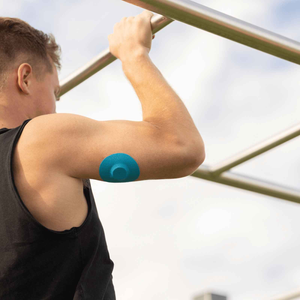
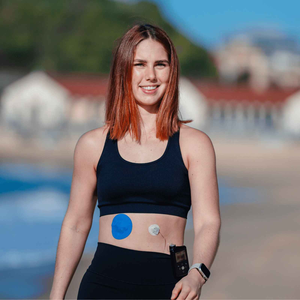
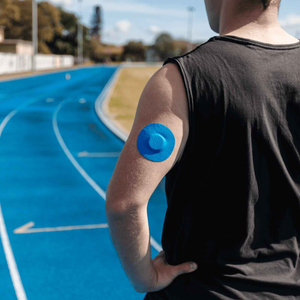
Using CGM patches designed for secure, long-lasting wear helps keep your sensor stable throughout the day, especially during exercise or in hot weather.
If you have experienced sensors falling off or inconsistent readings, understanding common CGM patch issues and how to fix them can make a noticeable difference.
Reliable data starts with a reliable setup.
Supporting better decisions without over-reliance
No single tool can manage diabetes on its own.
CGMs, food tracking tools, and supportive accessories all play different roles.
Tracking helps you build awareness, reduce guesswork, and recognise patterns more clearly.
But it does not replace clinical advice, personal experience, or individual insulin strategies.
The goal is not automation. It is better decision-making with less friction.
Reducing cognitive load in diabetes management
Living with diabetes means making decisions all day.
What to eat. How much. When to dose. Why levels changed.
That mental load adds up.
Simplifying how you track meals can reduce that burden. Instead of focusing on logging perfectly, you can focus on understanding patterns and making small adjustments over time.
This becomes especially important when dealing with the mental load of managing diabetes every day.
Limitations and realistic expectations
No tracking method is perfect.
You may still encounter inaccurate portion estimates, difficulty analysing complex meals, and variation depending on cuisine.
For important decisions, it is always worth checking with your care team.
Tools like SNAQ are there to support your decisions, not replace your judgement.
Final thoughts
Managing diabetes is not about finding one perfect tool.
It is about building a system that works for your lifestyle.
Food tracking, CGM data, and reliable sensor wear all contribute to that system.
When these elements work together, you spend less time guessing and more time understanding your glucose patterns.
And that leads to more confident, sustainable diabetes management over time.


